

Description
Build a Smart Weather Monitoring Station with Arduino
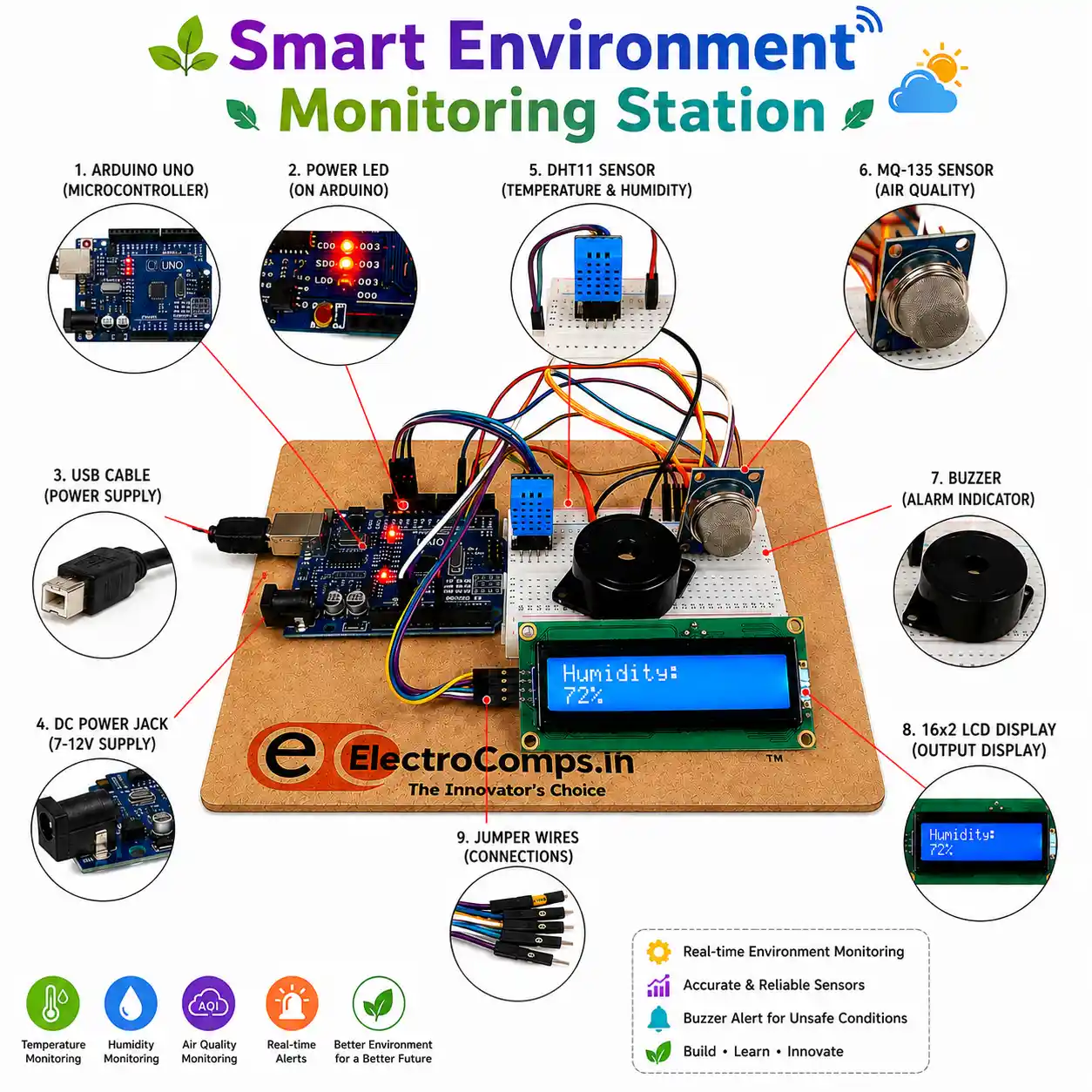
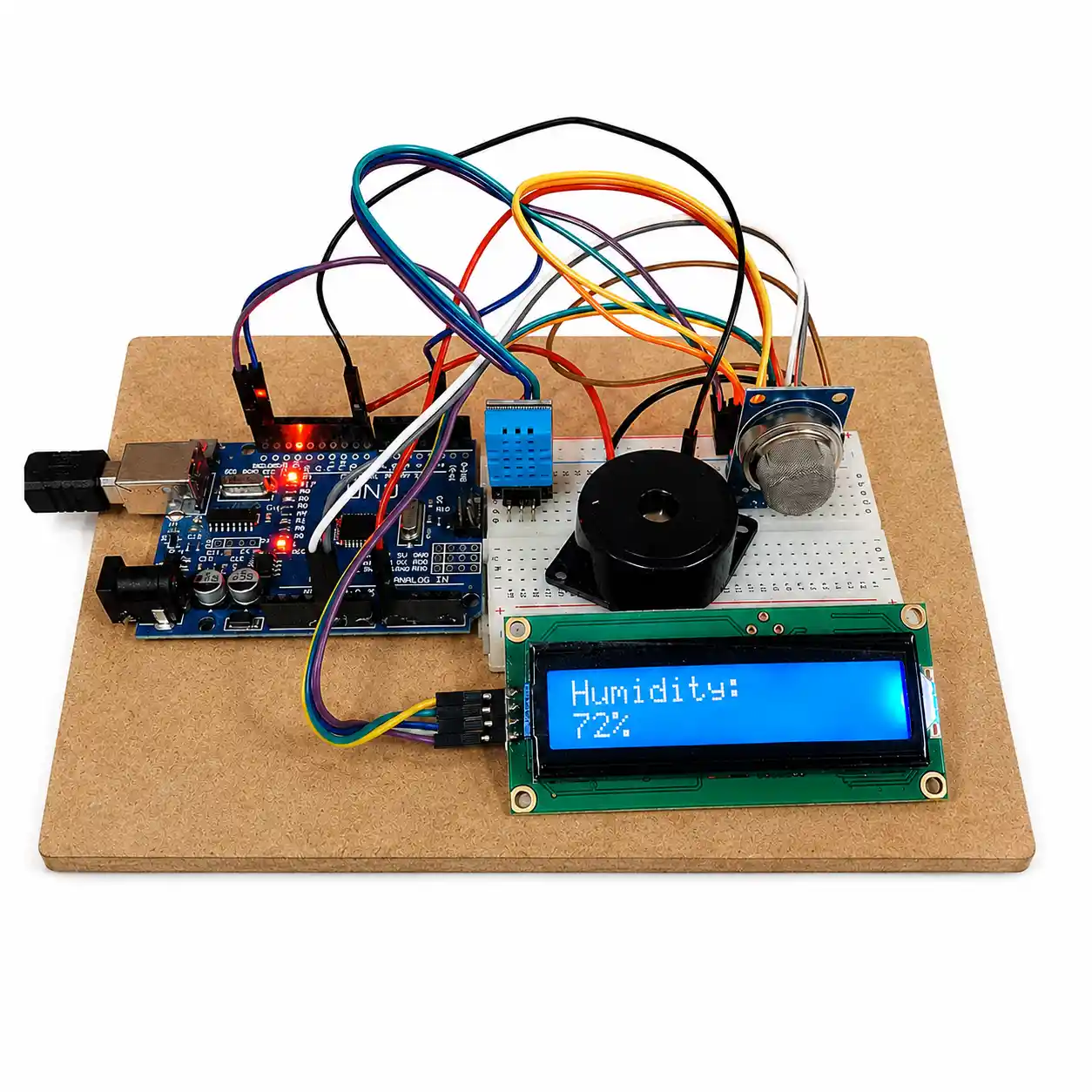
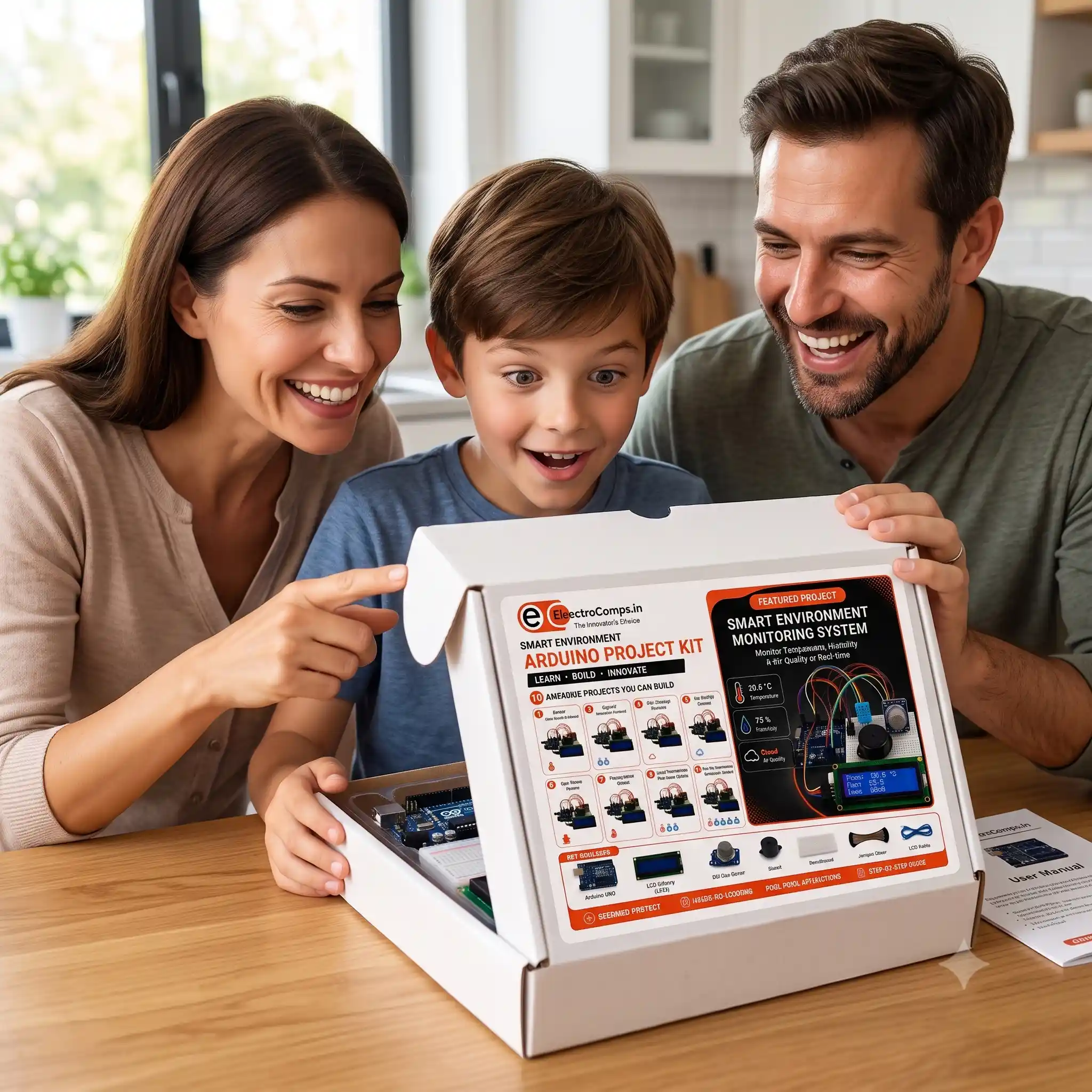
The Smart Weather Monitoring Station School Science Project Kit by ElectroComps is a practical Arduino-based STEM project designed to help students explore weather monitoring, environmental sensing, electronics and programming. The project combines an Arduino board with a DHT11 temperature and humidity sensor and an MQ gas sensor to create an interactive environmental monitoring model.
Students can assemble the circuit on a small breadboard, connect the sensors and buzzer, upload the Arduino program and demonstrate how electronic sensors can monitor conditions around them. A detailed project manual is included to guide students through the project-making process.
What Makes This Arduino Weather Project Special?
The Smart Weather Monitoring Station School Science Project Kit combines multiple concepts into one educational project. The DHT11 sensor can be used to measure temperature and humidity, while the MQ gas sensor can detect the presence of certain gases or changes in air quality depending on the specific MQ sensor used.
The Arduino works as the main controller. It receives information from the connected sensors and processes the readings according to the uploaded program. The buzzer can provide an audible alert when the programmed condition is detected.
This gives students an opportunity to understand how real-world monitoring systems use sensors and microcontrollers to collect environmental information.
Learn Temperature and Humidity Monitoring
The DHT11 sensor is an important part of the project. It allows students to experiment with measuring surrounding temperature and humidity.
Students can observe how the readings change under different environmental conditions and understand the importance of monitoring temperature and moisture in applications such as weather observation, agriculture, storage and environmental studies.
Understand Gas Detection
The MQ gas sensor introduces students to the concept of gas sensing and environmental safety. The sensor responds to certain gases or changes in gas concentration depending on the exact MQ sensor model supplied with the kit.
When the programmed threshold or condition is reached, the Arduino can activate the buzzer to demonstrate an alert system.
This makes the project more than a simple weather model—it also introduces students to the broader concept of environmental monitoring and warning systems.
How the Smart Weather Monitoring Station Works
The Arduino acts as the brain of the project. The DHT11 sensor provides temperature and humidity information, while the MQ gas sensor provides gas-sensing information.
The Arduino program continuously reads the connected sensors and processes the incoming data. According to the programmed conditions, the system can activate the buzzer as an alert.
Students can explain the project using a simple flow:
Sensors → Arduino → Program Processing → Monitoring / Alert
This demonstrates the basic working principle of many modern electronic monitoring systems.
Step-by-Step Project Making
Prepare the Components
Take out the Arduino board, DHT11 sensor, MQ gas sensor, small breadboard, buzzer, Arduino programming cable and other required connecting wires or accessories supplied with the kit.
Build the Circuit
Place the required components on the small breadboard and connect them to the Arduino according to the circuit instructions provided in the project manual.
Connect the DHT11 Sensor
Connect the DHT11 temperature and humidity sensor to the appropriate Arduino pins. Check the wiring carefully before supplying power.
Connect the MQ Gas Sensor
Connect the MQ gas sensor according to the project circuit. The exact connections and sensor behavior can vary depending on the MQ sensor model included in the kit.
Connect the Buzzer
Connect the small buzzer to the Arduino so that the program can activate it when the required gas-sensing or environmental condition is detected.
Connect the Programming Cable
Use the Arduino programming cable to connect the Arduino board to a computer. This allows students to upload the required Arduino program.
Upload the Arduino Program
Open the required Arduino programming environment, select the appropriate board and port, and upload the project program according to the supplied manual.
Test the Project
After programming, power the circuit and observe the sensor readings. Test the DHT11 sensor under different environmental conditions and observe the response from the MQ gas sensor and buzzer.
Demonstrate the Project
Once the project is working correctly, students can present it at a school science exhibition. They can explain the role of each component and demonstrate how the Arduino receives sensor information and responds according to the programmed conditions.
What Students Learn
The Smart Weather Monitoring Station School Science Project Kit provides practical learning in several STEM areas:
- Arduino programming
- Temperature measurement
- Humidity monitoring
- Gas sensing
- Environmental monitoring
- Sensor technology
- Microcontroller operation
- Basic electronics
- Breadboard circuit building
- Digital input and output
- Buzzer-based alerts
- Embedded programming
- Problem solving and troubleshooting
Components Included in the Kit
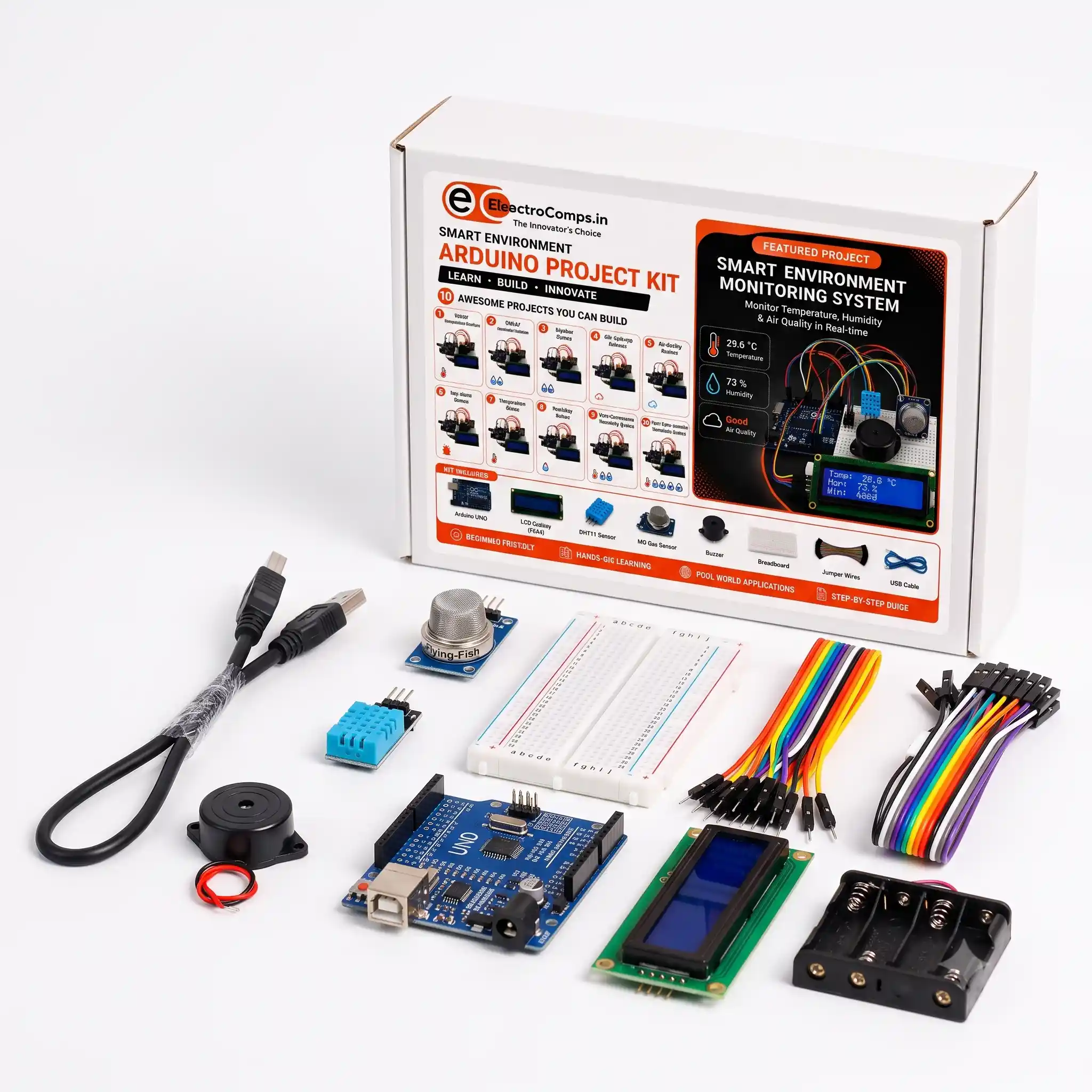
The kit includes:
- Arduino board
- DHT11 temperature and humidity sensor
- MQ gas sensor
- Small breadboard
- Small buzzer
- Arduino programming cable
- Project-making manual with step-by-step guidance
The exact Arduino board or MQ sensor model may vary depending on the kit version.
Perfect for School Science Exhibitions
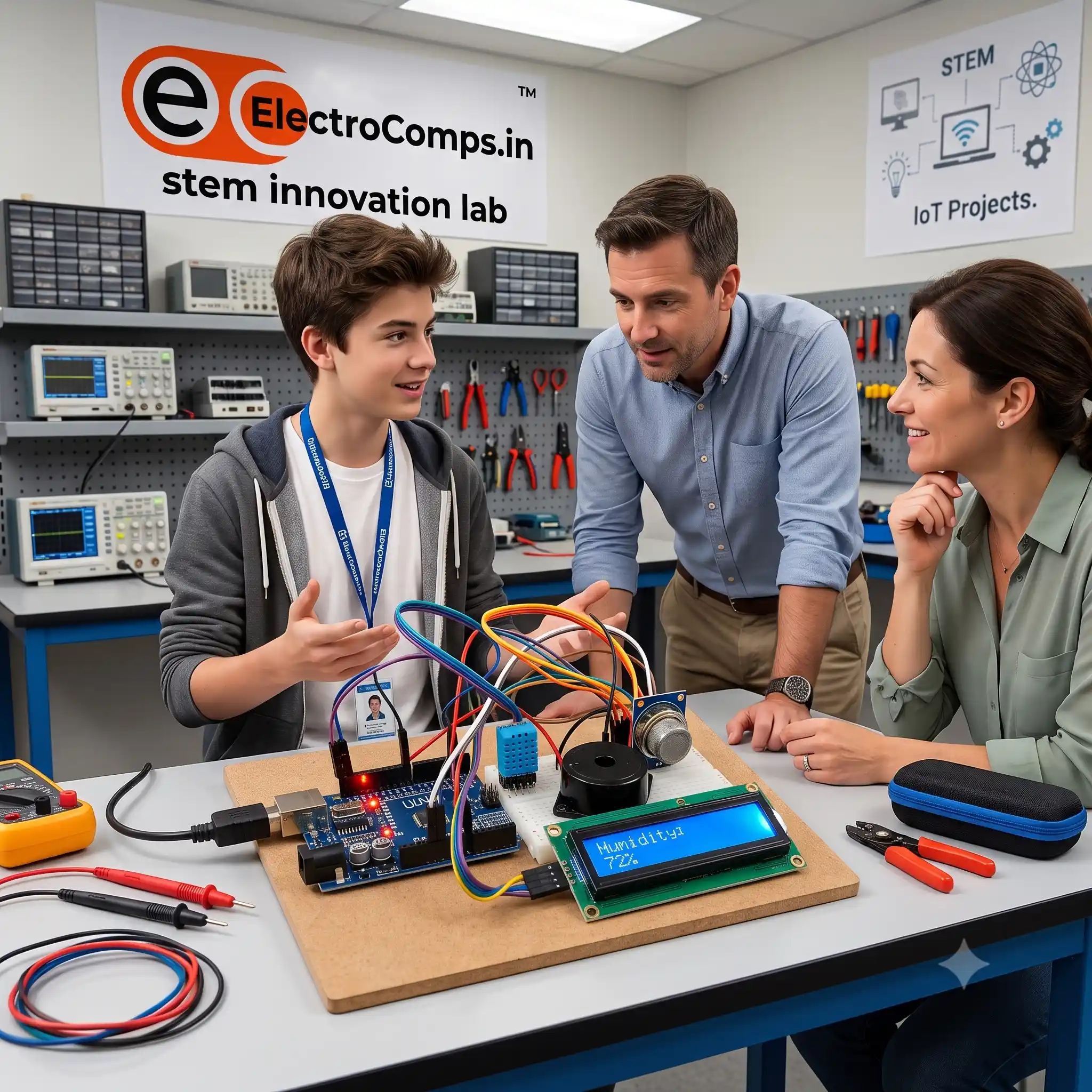
The Smart Weather Monitoring Station School Science Project Kit is an excellent choice for students preparing a practical science exhibition or STEM demonstration. Instead of presenting only a static model, students can demonstrate actual sensor-based monitoring and explain the role of programming in controlling the system.
The combination of weather-related sensing and gas detection also gives students an opportunity to discuss how environmental monitoring technology can be used in real-world applications.
Ideal for STEM and Electronics Learning
This Arduino-based project is suitable for students who want to develop practical skills in electronics and programming. Building the circuit on a breadboard helps students understand how individual components work together to create a complete electronic system.
The included manual makes the project-making process easier by providing structured guidance for assembly and programming.
Educational Applications
The Smart Weather Monitoring Station School Science Project Kit can be used for:
- School science exhibitions
- STEM learning activities
- Arduino programming practice
- Electronics demonstrations
- Environmental monitoring projects
- Sensor-based science projects
- School innovation competitions
- DIY electronics learning
- Student technology demonstrations
Frequently Asked Questions
What is the Smart Weather Monitoring Station School Science Project Kit?
The Smart Weather Monitoring Station School Science Project Kit is an Arduino-based educational project that uses sensors to demonstrate temperature, humidity and gas monitoring.
Which sensor is used for temperature and humidity?
The project uses a DHT11 sensor for temperature and humidity measurement.
What is the MQ gas sensor used for?
The MQ gas sensor is used to demonstrate gas detection. The exact gases detected depend on the specific MQ sensor model included with the kit.
What is the purpose of the buzzer?
The buzzer provides an audible alert when the programmed condition for the project is detected.
Is Arduino programming required?
Yes. The Arduino needs to be programmed to read the sensors and control the project. The included manual provides guidance for making and programming the project.
Is a breadboard included?
Yes. A small breadboard is included for assembling the project circuit.
Is a programming cable included?
Yes. An Arduino programming cable is included in the kit.
Is a project manual included?
Yes. The kit includes a manual with guidance for making the project step by step.
Start Building Your Weather Monitoring Project
The Smart Weather Monitoring Station School Science Project Kit gives students an engaging way to combine science, electronics and programming in one working model. With Arduino, DHT11, MQ gas sensing, a buzzer and a practical project manual, students can build, test and confidently explain their project at a science exhibition.
ElectroComps – Learn. Build. Innovate.
Reviews
There are no reviews yet.