

Description
Automatic Rain Detection and Alarm System School Science Project Kit
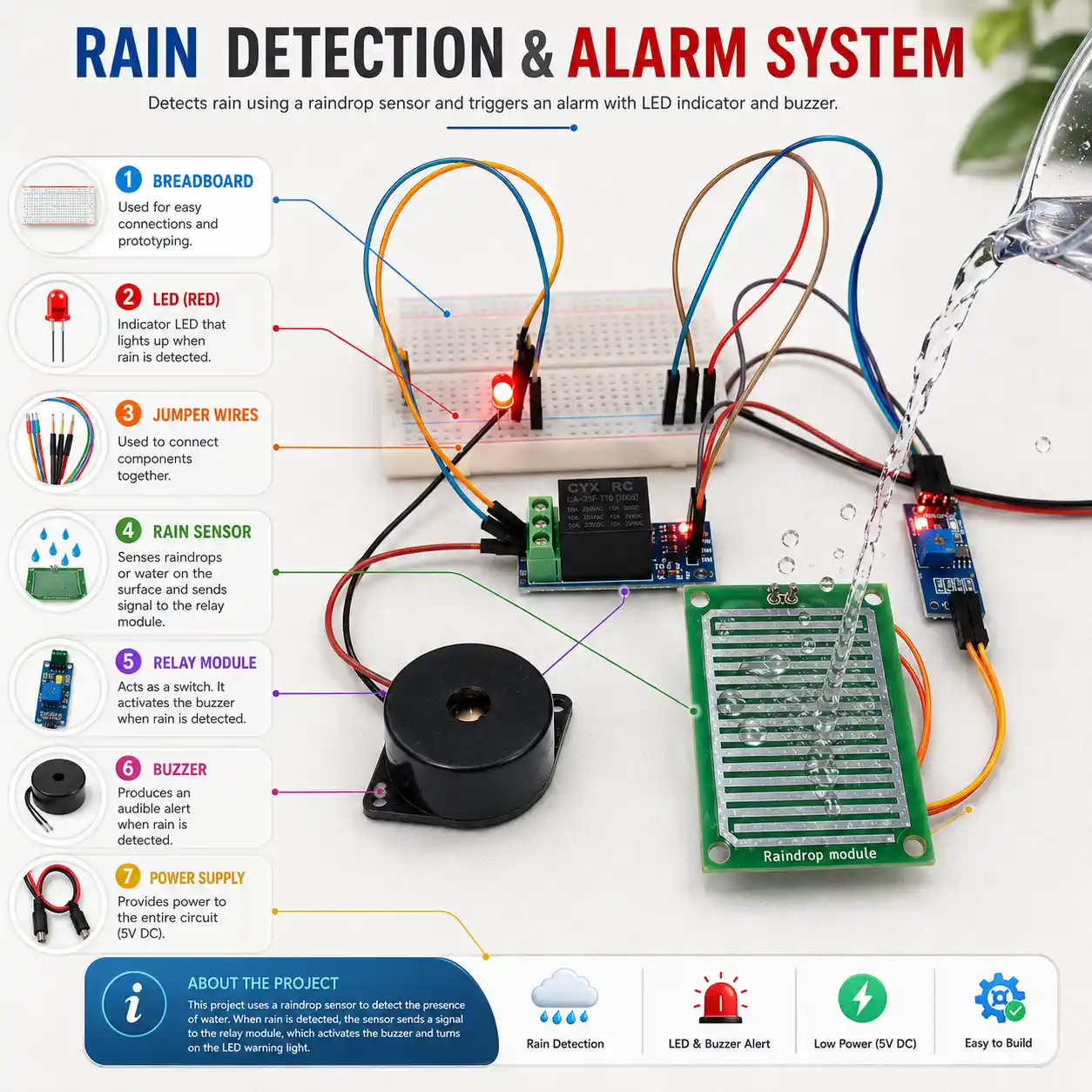
The Automatic Rain Detection and Alarm System School Science Project Kit by ElectroComps is an engaging DIY electronics project designed to help students understand rain detection, sensors, electronic circuits and automatic alert systems. The project demonstrates how a simple sensor can detect the presence of rain and trigger an alarm automatically.
Rain detection systems can be useful in many practical situations, including weather monitoring, agriculture, outdoor equipment protection and smart-home applications. This school science project introduces students to the basic working principle behind these systems through a simple hands-on model.
How the Automatic Rain Detection System Works
The Automatic Rain Detection and Alarm System School Science Project Kit uses a rain sensor to detect water droplets or moisture reaching the sensing surface. Under dry conditions, the sensor remains in its normal state. When rainwater falls onto the sensor, its electrical characteristics change.
The connected electronic circuit detects this change and activates the buzzer or alarm. This provides an immediate audible indication that rain has been detected.
The basic working principle can be explained as:
Rainwater → Rain Sensor → Detection Circuit → Alarm
This simple process demonstrates how sensors can be used to detect environmental changes and automatically trigger an electronic response.
Build Your Own Rain Detection Project
This project gives students the opportunity to assemble the individual electronic components and create their own project model. The model can be mounted on cardboard, an acrylic sheet or another suitable project base.
Students can also customize the appearance of their model according to their science exhibition requirements and creativity.
Step-by-Step Project Making
Prepare the Components
Collect the components required for the project and identify the rain sensor, controller or detection circuit, buzzer, power supply and connecting wires according to the supplied project instructions.
Mount the Rain Sensor
Place the rain sensor in an exposed position where water droplets can easily reach its sensing surface. This allows the sensor to detect rainfall during the demonstration.
Connect the Circuit
Connect the rain sensor to the electronic detection circuit according to the project manual. Carefully check each connection before supplying power.
Connect the Alarm
Connect the buzzer or alarm output to the circuit. The alarm will provide an audible indication when rain is detected.
Connect the Power Supply
Connect the recommended power source to the project. Check the required voltage and polarity before switching on the circuit.
Test the Dry Condition
Switch on the project while the rain sensor is dry. Observe the normal operating condition of the circuit.
Test With Water
Carefully place a few drops of water on the rain sensor. The sensor should detect the water and the circuit should activate the alarm according to its design.
Demonstrate the Project
Students can demonstrate the Automatic Rain Detection and Alarm System School Science Project Kit at their science exhibition by showing the sensor in dry conditions and then adding water to demonstrate automatic rain detection and alarm activation.
What Students Learn
The Automatic Rain Detection and Alarm System School Science Project Kit helps students understand:
- Rain detection
- Sensor technology
- Environmental monitoring
- Electronic circuits
- Automatic alert systems
- Digital and analog sensor concepts
- Basic electronics
- Circuit assembly
- Power supply concepts
- STEM project development
- Practical troubleshooting
Why Is Rain Detection Useful?
Rain detection can help automate tasks that would otherwise require manual observation. For example, a rain sensor can be used to provide an alert when rainfall begins or as part of a larger automated system.
Similar sensing concepts can be used in agriculture, weather monitoring, smart homes, outdoor equipment and automated control systems.
Perfect for School Science Exhibitions
The Automatic Rain Detection and Alarm System School Science Project Kit is a good choice for students looking for an interactive science exhibition project. The project provides a clear cause-and-effect demonstration: when water reaches the sensor, the electronic system responds with an alarm.
This makes it easy for students to explain the relationship between environmental conditions, sensors and automatic electronic control.
DIY STEM Learning Experience
The project encourages students to learn by building. Instead of using a completely assembled model, students can understand the role of each component and create their own project structure.
They can also improve the project presentation by adding labels, a rain-cloud model, a house, garden, agricultural field or other creative elements.
Real-World Applications
Rain detection technology can be used in:
- Weather monitoring systems
- Smart agriculture
- Automated irrigation systems
- Smart home projects
- Outdoor equipment protection
- Weather warning systems
- IoT environmental monitoring
- Educational electronics projects
Key Features
- Automatic rain detection
- Rain sensor-based operation
- Audible alarm indication
- DIY electronics project
- Practical STEM learning
- Environmental sensing concept
- Beginner-friendly project concept
- Suitable for school exhibitions
- Customizable project model
- Hands-on electronics experience
Frequently Asked Questions
What is the Automatic Rain Detection and Alarm System School Science Project Kit?
The Automatic Rain Detection and Alarm System School Science Project Kit is an educational electronics project that detects water or rainfall using a rain sensor and activates an alarm when rain is detected.
How does the rain sensor work?
The rain sensor detects water reaching its sensing surface by detecting a change in its electrical characteristics. The connected circuit uses this change to determine whether rain has been detected.
Is this project suitable for school science exhibitions?
Yes. Its simple and interactive operation makes it suitable for school science fairs, STEM exhibitions and electronics demonstrations.
Can students customize the project model?
Yes. Students can create their own model using cardboard, acrylic or other suitable materials and customize it according to their exhibition theme.
What can students learn from this project?
Students can learn about rain sensors, environmental monitoring, electronic circuits, automatic alarms, power supplies and basic STEM concepts.
Build and Demonstrate Your Rain Detection System
The Automatic Rain Detection and Alarm System School Science Project Kit provides students with a practical way to explore environmental sensing and automatic electronic responses. Build the circuit, test the rain sensor and demonstrate how a simple electronic system can detect rainfall and generate an alarm.
ElectroComps – Learn. Build. Innovate.
Reviews
There are no reviews yet.